<div class="page-header with-image bleed">
            <picture>
            <img src="https://surzyme.cn/wp-content/uploads/2026/10/1791773144-1721223377333312.jpg" width="1920" height="400" class="feature-image wp-post-image" alt="" decoding="async" fetchpriority="high">
        </picture>
        <header class="post-header">
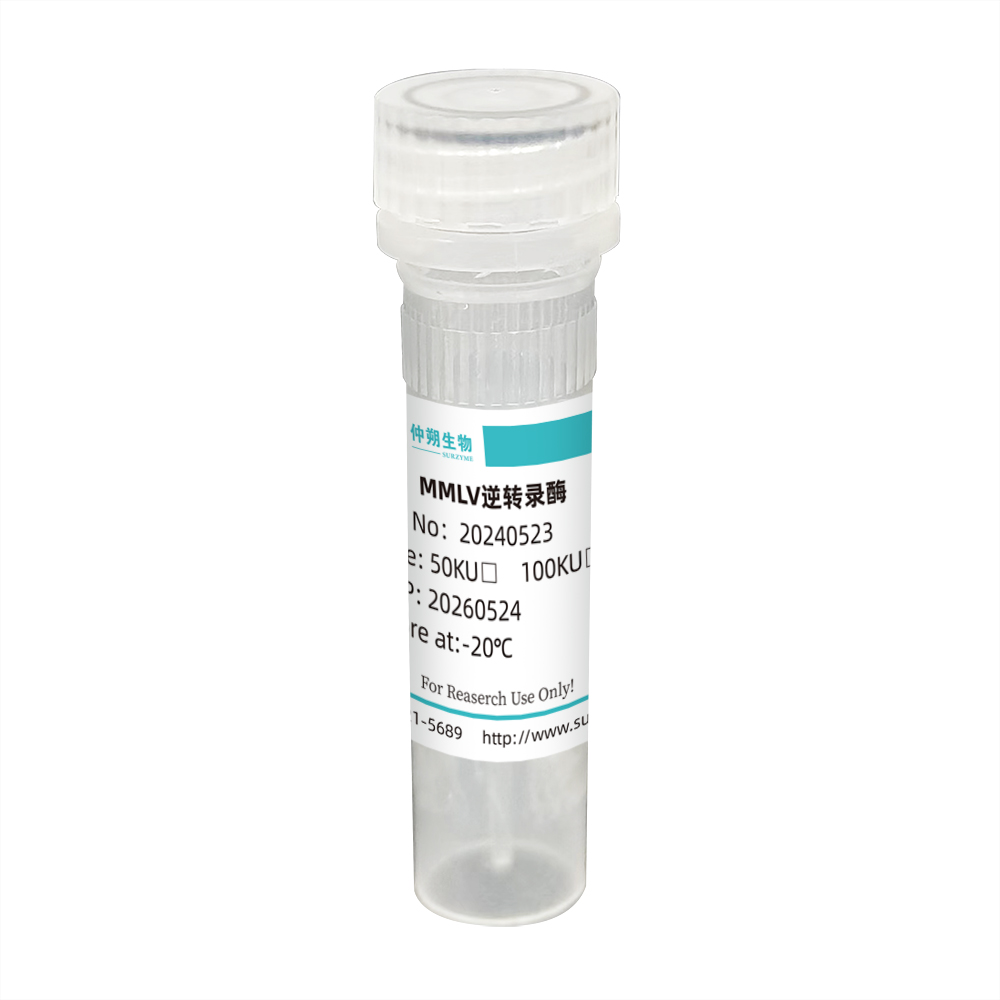
        <h1 class="post-title" style="">Second-generation M-MLV (H-) Reverse Transcriptase (thermostable at 65°C)</h1>
        <div class="post-metas">
                            <span>Last updated on 2026-10-12</span>
                                    <a href="https://surzyme.cn/author/surzyme/">
                    <span class="meta-author">
                        <img alt='surzyme' src='https://weavatar.com/avatar/af42555338bd02899f2f4c80494cf4fc9a3a807f2521d66cbd4749b27b995a25?s=24&#038;d=mm&#038;r=g' srcset='https://weavatar.com/avatar/af42555338bd02899f2f4c80494cf4fc9a3a807f2521d66cbd4749b27b995a25?s=48&#038;d=mm&#038;r=g 2x' class='avatar avatar-24 photo avatar-small' height='24' width='24' loading='lazy' decoding='async'/>                        surzyme                    </span>
                </a>
                                <span>0 views</span>
                            </div>
    </header>
</div>

<h4 class="wp-block-heading"><strong>Reverse Transcriptase</strong></h4>


<p class="wp-block-paragraph"><strong>Product Information</strong></p>


<figure class="wp-block-table"><table class="has-fixed-layout"><tbody><tr><td>Product Name</td><td>Product Code</td><td>Size</td></tr><tr><td rowspan="3">Reverse Transcriptase</td><td>ZS0001ES20</td><td>20KU</td></tr><tr><td>ZS0001ES50</td><td>50KU</td></tr><tr><td>ZS0001ES100</td><td>100KU</td></tr></tbody></table></figure>


<p class="wp-block-paragraph"><strong>Product Description</strong></p>


<p class="wp-block-paragraph">MMLV Reverse Transcriptase is derived from Moloney Murine Leukemia Virus (MMLV). This enzyme is genetically modified via site-directed mutagenesis. It efficiently synthesizes first-strand cDNA up to 15 kb. Mutations improve its thermal stability and deliver excellent reverse transcription efficiency for GC-rich fragments or RNA with complex secondary structures. The synthesized first-strand cDNA is widely applicable for second-strand synthesis, hybridization, PCR amplification and Real-Time PCR.</p>


<p class="wp-block-paragraph"><strong>Product Properties</strong></p>


<figure class="wp-block-table"><table class="has-fixed-layout"><tbody><tr><td>Source</td><td><em>E.coli</em></td></tr><tr><td>Molecular Weight</td><td>79.0 kDa</td></tr><tr><td>Isoelectric Point</td><td>8.82</td></tr><tr><td>Purity</td><td>≥95%</td></tr><tr><td>Enzyme Activity</td><td>250–300 U/μL</td></tr><tr><td>Specific Activity</td><td>≥1.5×10<sup>6</sup> U/mg protein</td></tr><tr><td>Storage Buffer</td><td>20 mM Tris-HCl pH 7.5 @ 25℃, 100 mM NaCl, 0.2 mM EDTA, 1 mM DTT, 0.1 mg/mL BSA, 0.01% Tween 20, 50% Glycerol.</td></tr><tr><td>Unit Definition</td><td>One unit is defined as the amount of enzyme required to catalyze the incorporation of 1 nmol deoxyribonucleotides into acid-precipitable material within 10 minutes at 37 ℃.</td></tr></tbody></table></figure>


<p class="wp-block-paragraph">Applications:</p>


<p class="wp-block-paragraph">• RT-PCR</p>


<p class="wp-block-paragraph">• First-strand cDNA synthesis</p>


<p class="wp-block-paragraph">• cDNA probe preparation</p>


<p class="wp-block-paragraph">• Construction of cDNA libraries with high full-length cDNA ratio</p>


<p class="wp-block-paragraph"><strong>Shipping and Storage</strong></p>


<p class="wp-block-paragraph">Shipped on dry ice. Store at -15℃ ~ -25℃; valid for 2 years. Thaw 5×RT Buffer 3.0 and 0.1 M DTT at room temperature before use, and freeze immediately after use.</p>


<p class="wp-block-paragraph">Heat Inactivation: Inactivate at 85℃ for 5 minutes.</p>


<p class="wp-block-paragraph">Product Features:<br>1. High purity<br>Purity of reverse transcriptase >95% verified by SDS-PAGE.</p>


<p class="wp-block-paragraph">2. Wide temperature tolerance<br>Reverse transcription of RNA templates is performed at different temperatures, followed by qPCR amplification of generated cDNA, with a negative control set without reverse transcriptase. Results demonstrate robust reverse transcription performance at 42℃, 50℃ and 56℃.</p>


<p class="wp-block-paragraph">Notes</p>


<p class="wp-block-paragraph">This product is for research use only. Not for pharmaceutical, clinical therapeutic, food or cosmetic applications.</p>
