1. Product Overview
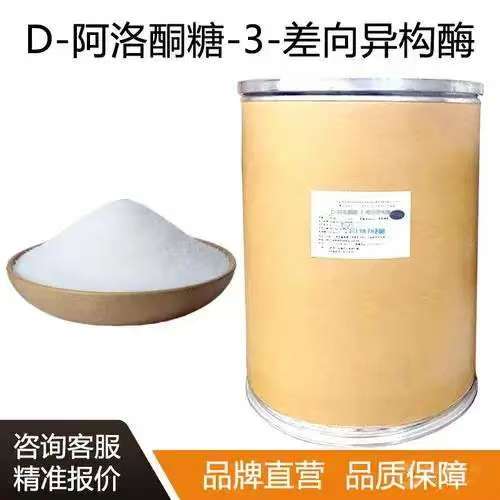
This product is built around a D-allulose 3-epimerase heterologously expressed in recombinant E. coli BL21(DE3), prepared by immobilization on a dedicated carrier, and supplied as a granular immobilized enzyme preparation. It efficiently catalyzes the C-3 epimerization of D-fructose to D-allulose, with substrate conversion consistently around 27%, and can be reused more than 20 times with high retention of enzyme activity. Combining stable catalytic efficiency, ease of use, and recyclability, the product is suitable for laboratory bench-scale, pilot-scale, and industrial production of D-allulose, and serves as a core biocatalyst for the biosynthesis of low-calorie rare sugars.
Product Code: DAE-EC-IM001
English Name: D-Allulose 3-Epimerase (Recombinant E. coli, Immobilized Enzyme)
EC Number: 5.1.3.30
2. Core Technical Parameters
1. Expression and immobilization: Expressed in recombinant E. coli BL21 and then immobilized; the carrier has high mechanical strength, and the enzyme binds stably with no leakage
2. Catalytic performance: With 50–500 g/L D-fructose as substrate, D-allulose conversion is ≥27% under optimal conditions
3. Reusability: Under identical reaction conditions, it can be reused continuously more than 20 times.
4. Optimal reaction conditions: temperature 55–60 °C, pH 7.0–8.0; cobalt chloride is added to the reaction system
5. Substrate compatibility: Suitable for low-, medium-, and high-concentration D-fructose solutions (50–500 g/L), with no substrate inhibition
6. Product form: Milky white to pale yellow granules, particle size 0.5–1.0 mm, free of caking and odor
7. Definition of enzyme activity unit: The amount of enzyme that catalyzes the formation of 1 μmol of D-allulose per minute at 58 °C and pH 7.5 equals one unit of enzyme activity (U). This product is available in activity specifications of 1000 U/g, 5000 U/g, and 10000 U/g (customizable)
3. Product Specifications
Specification: 1 portion/bottle (customized and bundled on request)
4. Instructions for Use
1. Prepare the D-fructose solution: Dissolve D-fructose in water to the target concentration (50–500 g/L), stir until fully dissolved, and adjust the pH to 7.0–8.0.
2. Standard catalytic reaction procedure
1. Add the immobilized enzyme granules to the D-fructose solution at an enzyme-to-substrate ratio of 10–50 U/g D-fructose;
2. Incubate with constant temperature in a 55–60 °C water bath/shaker (100–150 rpm) for 5–12 h (adjustable according to production requirements);
3. After the reaction, quickly separate the immobilized enzyme granules from the reaction liquid by filtration/centrifugation (3000 rpm, 5 min). The reaction liquid is the conversion solution containing D-allulose and can be subjected to subsequent separation and purification.
3. Reuse procedure for the immobilized enzyme
Following the standard catalytic method above, add the enzyme directly to fresh D-fructose solution for the next catalytic reaction;
During repeated use, discontinue use if the conversion rate drops noticeably (below 20%).
4. Rapid enzyme activity assay method
1. Take 10 mL of 100 g/L D-fructose solution and preheat at 58 °C for 5 min;
2. Add 0.1 g of immobilized enzyme granules and react at 58 °C and 150 rpm for 1 h, then quickly filter to separate the enzyme granules;
3. Determine the D-allulose concentration in the reaction liquid by high-performance liquid chromatography (HPLC) and calculate the actual enzyme activity according to the definition of the enzyme activity unit.
5. Storage and Stability
1. Short-term storage: Store sealed, protected from light, and dry at 2–8 °C. Use as soon as possible after opening, and seal the remainder with paraffin film;
2. Long-term storage: Store protected from light at 2–8 °C throughout. In the unopened state, the conversion rate can still be maintained at around 27% within 12 months, with no significant decline in reusability;
3. Conditions to avoid: Freezing (below 0 °C), high temperature (>70 °C), strong acids (pH<5.0), and strong bases (pH>9.0) are strictly prohibited; avoid contact with organic solvents and heavy metal ions; vigorous stirring and grinding are strictly prohibited to prevent particle damage and enzyme loss.
6. Precautions
1. This product is a biological catalyst and is intended only for research and industrial production of D-allulose. It must not be used for clinical diagnosis or treatment, or added directly to food;
2. Wear disposable gloves and a mask during handling, and avoid direct contact with skin and mucous membranes. In case of accidental contact, rinse immediately with plenty of water;
3. During the catalytic reaction, the reaction temperature is recommended to be kept at 55–60 °C. Too high a temperature (>70 °C) causes a rapid decline in enzyme activity, while too low a temperature reduces the conversion rate and prolongs the reaction time;
5. Due to minor differences in production processes, the conversion rate of different batches may fluctuate by ±1%. This is normal and does not affect use;
6. During transport, the product must be shipped under 2–8 °C cold chain conditions to prevent high temperatures and jolting.
7. Application Areas
1. Food industry: Preparation of the low-calorie rare sugar D-allulose for the production of sugar-free/low-sugar beverages, pastries, dairy products, confectionery, and other foods, partially replacing sucrose and reducing product calories;
2. Biomedicine: Synthesis of D-allulose intermediates for the R&D and production of blood-sugar-lowering and fat-reducing functional foods and dietary supplements;
3. Laboratory research: Optimization of D-allulose biosynthesis processes, studies of enzymatic reaction kinetics, and development of rare sugar preparation technologies;
4. Industrial production: Can be used directly for small-scale industrial production of D-allulose and also serves as a base formulation for process scale-up.
8. Quality Assurance
This product undergoes rigorous enzyme activity testing, conversion rate verification, and reusability testing, and all indicators meet the above standards at the time of shipment. If, under the specified storage, transport, and use conditions, the customer finds abnormalities in indicators such as conversion rate or reusability within 1 month of receiving the product, they may apply for an after-sales review with the quality inspection report and experimental data.
9. Contact Us
Purchasing Hotline: 18621959160
Official Email: marketing@surzyme.com
 surzyme