
 surzyme
| Pyrophosphatase IPYR/B | Pyrophosphatase | 9024-82-2 | GMP-like |
1. Product Overview
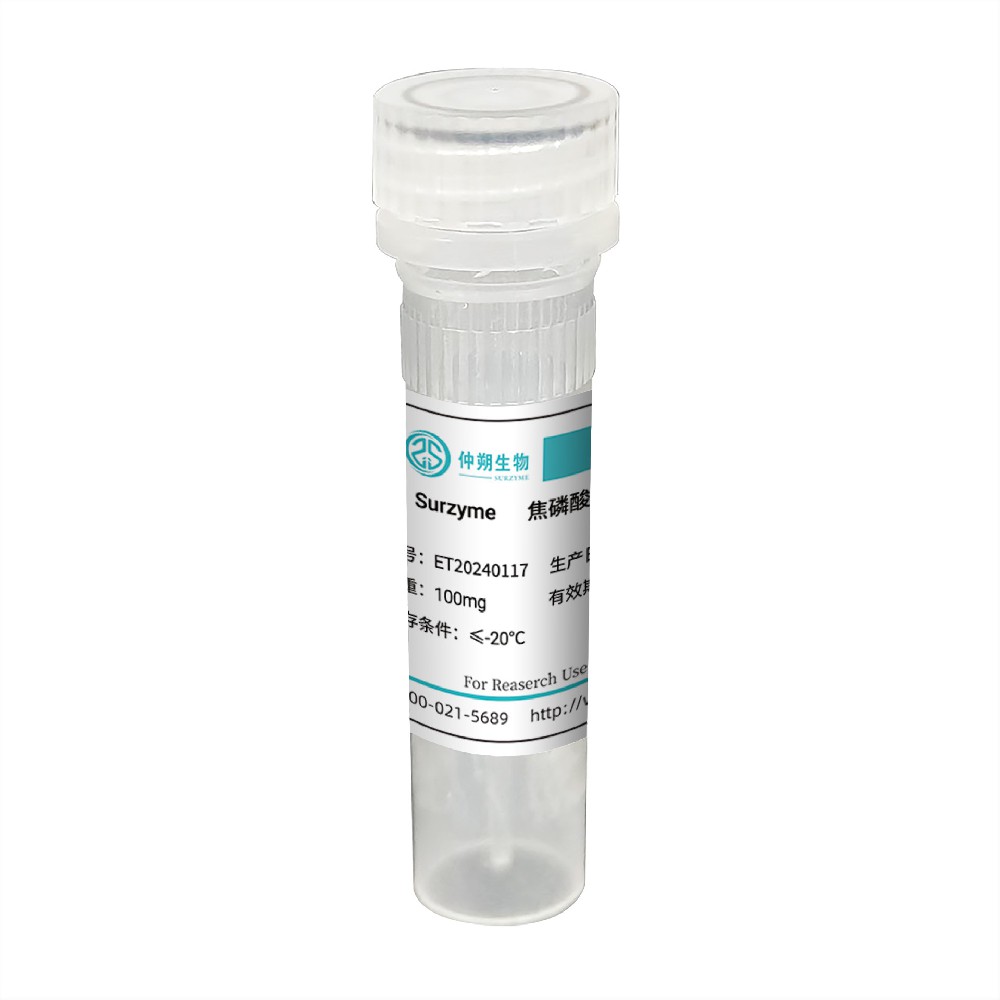
PPaseTba is a broad-temperature, highly stable inorganic pyrophosphatase (English name: Pyrophosphatases, CAS: 9024-82-2). It is a newly discovered thermophilic soluble inorganic pyrophosphatase that efficiently hydrolyzes PPi and relieves PPi feedback inhibition in nucleic acid synthesis, in vitro transcription, and biosynthetic reactions. The product is suitable for PCR/RT‑PCR, LAMP, IVT, mRNA preparation, cell-free protein synthesis, and industrial biocatalysis, among other applications.
Unlike conventional thermophilic PPases, whose activity drops markedly at room temperature or moderate temperatures, this product combines high-temperature stability with broad-temperature activity. It delivers excellent enzymatic performance across the 25–95 °C range, reducing the need to repeatedly replenish the enzyme in multi-temperature-zone reactions and improving system stability and process simplicity.
2. Core Advantages
· Broad temperature range with high activity: It maintains a high level of activity at 65–95 °C and still retains about 60–70% of maximum activity at 25 °C, making it suitable for room-temperature, reverse transcription, moderate-temperature, and high-temperature cycling scenarios.
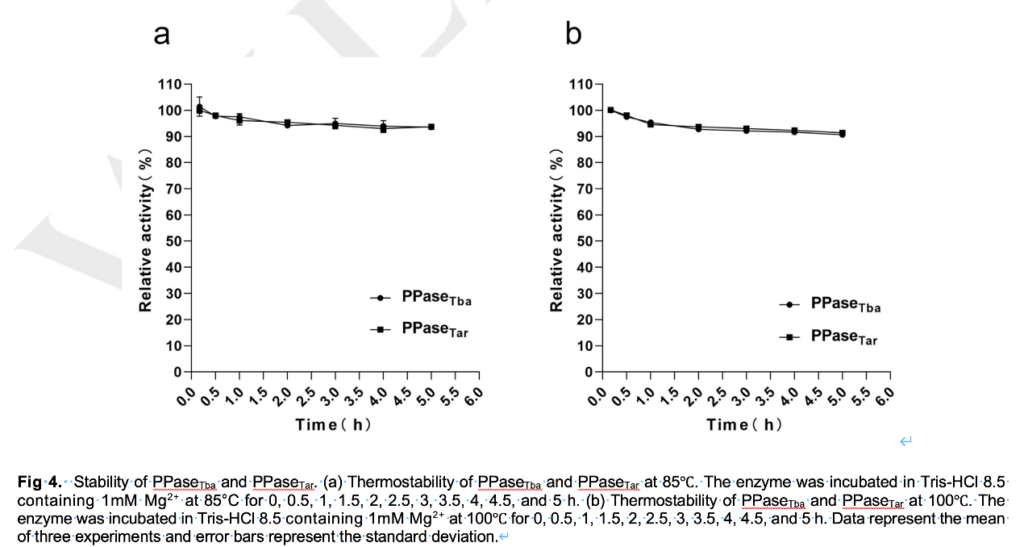
· Extremely high thermal stability: It retains high residual activity after prolonged treatment at 85 °C and 100 °C, making it compatible with PCR, LAMP, high-temperature amplification, and industrial reaction systems.
· Efficient PPi removal: It effectively alleviates PPi inhibition in PCR systems, restores amplification product formation, and improves the stability and interference resistance of molecular detection systems.
· Promotes IVT RNA synthesis: By continuously hydrolyzing PPi and maintaining Mg²⁺ availability, it helps increase RNA yield and supports the development of mRNA, RNA therapeutics, and research reagents.
3. Technical Specifications
| Item | Specification |
| Enzyme type | Thermophilic soluble PPase, Family I sPPase |
| Broad-temperature adaptability | Good application activity from 25–95 °C |
| Metal ion dependence | Mg²⁺-dependent; 1.0–2.5 mM recommended |
| Product form | Liquid enzyme preparation, lyophilized powder, diagnostic-grade enzyme raw material |
| Optimum temperature | Approx. 85 °C |
| Optimum pH | pH 8.5; excellent performance under slightly alkaline conditions |
| Specific activity | 300 U/mg |
| Main function | Hydrolyzes PPi and relieves PPi-mediated reaction inhibition |
| Purity | ≥95% SDS-PAGE |
| Storage conditions | Store frozen at -20 °C |
4. Application Scenarios
| Application | IndustryPain Point | Product Value |
| PCR/qPCR/RT‑PCR | PPi accumulation reduces amplification efficiency, and multi-temperature-zone reactions demand high enzyme stability | Improves amplification efficiency, sensitivity, and system robustness |
| LAMP and other isothermal amplification | Conventional enzymes lack sufficient stability under high-temperature conditions | Compatible with high-temperature isothermal systems and enhances continuous reaction capability |
| IVT and mRNA preparation | PPi inhibits transcription and consumes Mg²⁺ | Increases RNA yield and optimizes raw material utilization |
| Cell-free protein synthesis / industrial biocatalysis | PPi feedback inhibition limits reaction equilibrium and conversion rate | Drives the reaction toward product formation and improves conversion efficiency and process stability |
5. Ordering Information
6. Contact Information
Shanghai Surzyme Biotechnology Co., Ltd.
Address: Room 502, 5th Floor, Building A, No. 858 Yunqiao Road, Pudong New Area, Shanghai
Tel: 400-021-5689, 18621959160
Website: www.surzyme.com Email: sales@surzyme.com